Quick Answer
tl;dr: Set up AI to text back anyone whose call you miss within about a minute, using a short, human-sounding message that asks one clarifying question. Build in trigger words for true emergencies so those calls escalate straight to a live person, and make sure every conversation ends in a booked job or a clear next step instead of fizzling out.
If you miss a call, the fastest thing you can do is have AI text the caller back within a minute or two: acknowledge the call, ask what they need, and either book the job or flag it for you to call back. That’s the whole idea. The rest of this post is about doing that well instead of doing it badly, because there’s a real difference.
I’ve watched a lot of home service owners set this up and then wonder why it’s not working. Usually it’s not the technology. It’s what the text says, when it hands off to a human, and what happens after the customer replies.
What Is AI Missed-Call Text-Back?
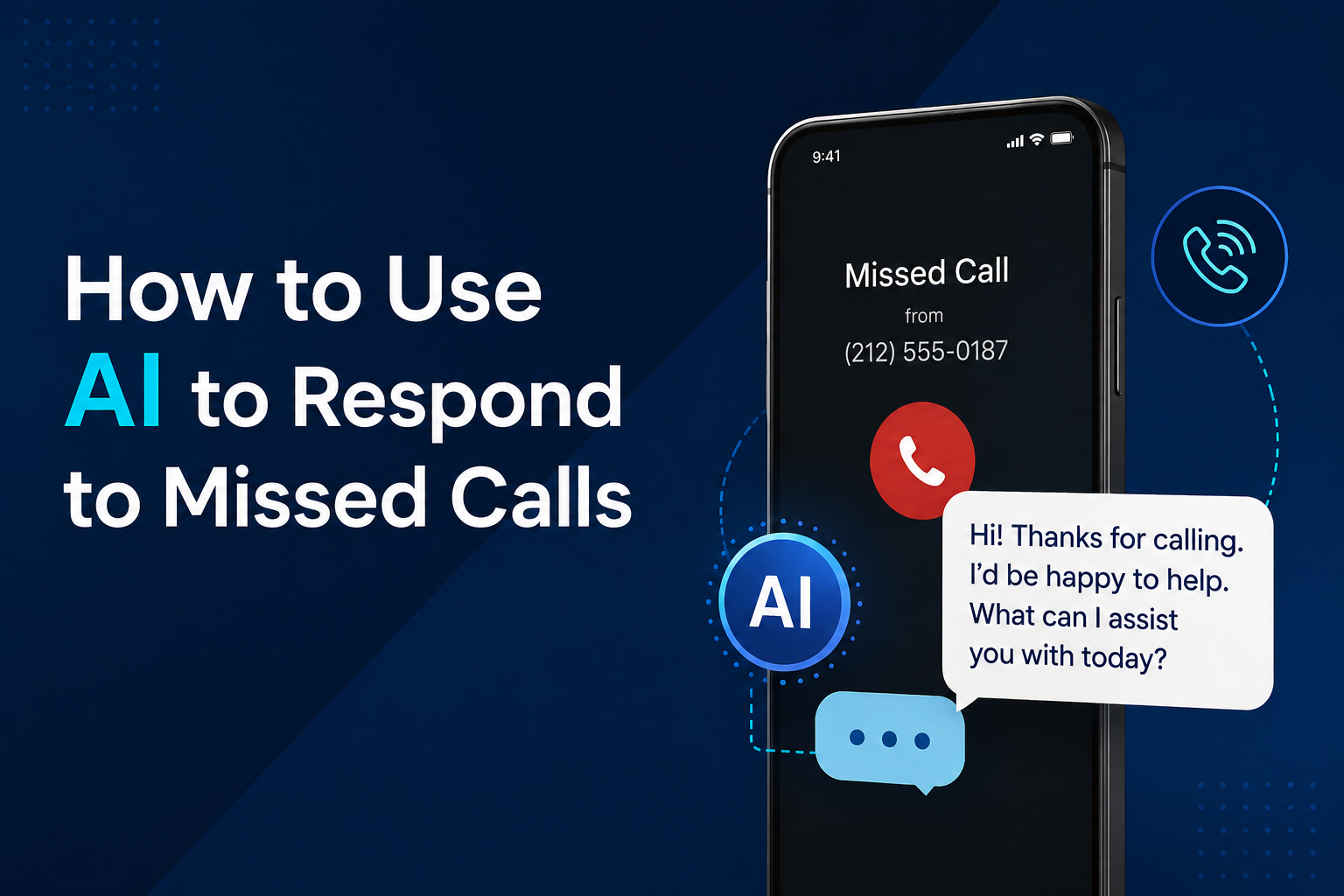
Missed-call text-back is a system that automatically sends a text message to anyone who calls your business and doesn’t get an answer. Instead of that caller hitting your voicemail (which almost nobody actually listens to anymore), they get a text on their phone within a minute or two.
The “AI” part just means the system can do more than send one canned message. A good setup can read what the caller said in a voicemail (if they left one), ask a couple of follow-up questions by text, figure out if it’s urgent, and either get enough information to book the job or route it to you for a callback.
Plain text-back without any AI behind it is just an auto-reply. It says “sorry we missed you” and stops. AI text-back keeps the conversation going until there’s an actual outcome: booked, scheduled callback, or flagged urgent.
What Actually Happens When You Miss a Call
Here’s the sequence, start to finish:
- A customer calls your business number.
- You don’t pick up, because you’re on a roof, under a sink, or it’s 9pm on a Tuesday.
- The call goes to voicemail or just drops.
- Within roughly 30-120 seconds, the system sends a text to that caller’s phone.
- The caller reads it (text messages get opened around 98% of the time, way higher than voicemail ever gets checked) and replies.
- AI asks a couple of clarifying questions, gets the details, and either books a time or hands the conversation to you.
That whole thing can happen before you’ve even finished the job you were on.
The 60-Second Window That Matters
Speed is the entire point. Studies on lead response time consistently show that contacting someone within 5 minutes converts dramatically better than waiting even 30 minutes, some studies put it at 8-10 times better. Most callers who don’t hear back quickly just call the next name on their search results. You’re not just competing on price or reviews anymore. You’re competing on who replies first.
That’s also the logic behind instant response being step one in almost every AI lead workflow, not just missed calls specifically. If you want the fuller picture of how instant response, qualification, booking, and follow-up all connect, The Best AI Workflows for Home Service Leads walks through all four.
What Should the First Text Actually Say?
Keep it short and give the caller four things: who you are, that you saw their call, what to do next, and roughly when they’ll hear back.
Here’s a real example. Say it’s 6pm on a Friday and a homeowner’s kitchen sink is backing up. They call your plumbing business, you’re mid-job and don’t pick up. A good first text looks like this:
“Hi, this is Mike with Reyes Plumbing, sorry I missed your call. What’s going on with the sink, and is water actively backing up right now? I’ll get back to you within the hour.”
That does three things at once: it’s clearly from a real business (not a robot), it asks the one question that tells you how urgent this is, and it sets an expectation so the caller doesn’t immediately call your competitor while waiting.
What to avoid: generic “we’ll be in touch” messages with no question and no timeline. Those read as an afterthought, and they don’t give the AI (or you) anything to work with on the next reply.
A quick reference for what belongs in that first message:
| Element | Why it matters |
|---|---|
| Your name and business name | Feels human, not like spam |
| Acknowledgment of the call | Shows you noticed, not ignoring them |
| One clarifying question | Starts qualifying the job immediately |
| A timeframe | Buys you time without losing the lead |
When Should AI Keep Talking vs. Hand Off to a Human?
This is the part most guides skip, and it’s the part that actually matters for how this feels to your customers.
AI should keep handling the conversation when the job is routine: someone wants a quote, wants to schedule a non-urgent visit, or is asking basic questions about pricing or availability. That’s a good use of AI: it’s patient, it’s instant, and it doesn’t get tired of answering “do you service my area” for the fortieth time this week.
AI should hand off to a real person the moment urgency shows up. In my experience, you want specific trigger words built into the flow (“flooding,” “no heat,” “sparking,” “gas smell,” “burst,” “emergency”) that immediately alert you or your dispatcher instead of letting the bot keep chatting. A no-heat call in January at 11pm is not a job for a text thread that gets answered in the morning.
If you’re deciding between leaning on text or leaning on a live voice option (AI or human) for these judgment calls, SMS vs. AI Answering Service: What Books More Jobs? breaks down which channel actually converts better for which situations, and it’s worth reading alongside this one.
Emergency Triage Words That Should Trigger a Human
A short, practical list to program into whatever tool you use:
- Water: flooding, leak, burst, backup, no water
- HVAC: no heat, no AC (in extreme temps), gas smell
- Electrical: sparking, smoke, power out, burning smell
- General: emergency, ASAP, ER-level language, “right now”
If any of those show up in a reply, the system should stop trying to qualify politely and get a human on the phone immediately.
How Does This Actually Turn Into a Booked Job?
Sending a nice text isn’t the finish line. It’s the opening move. The real value shows up in what happens after the customer replies.
A well-built flow looks like this: caller replies to the text, AI asks 2-3 qualifying questions (what’s the issue, what’s the address, how urgent), then either offers available time slots pulled from your calendar or flags the conversation for you to finish by phone. The best setups sync directly with your scheduling software so a booked slot actually lands on your calendar, not just in a text thread you have to remember to check.
I’ve seen owners get this half right: the text goes out, the customer replies, and then… nothing, because nobody’s watching the inbox. Text-back without a real qualification and booking step behind it is just an expensive way to make someone feel briefly acknowledged before they still don’t get a job scheduled. Set a rule: every conversation gets a same-day resolution (booked, scheduled callback, or explicitly closed out) even if a human has to finish it.
Is This Legal?
Yes, generally, but there’s a specific rule you need to follow. Because the caller reached out first, replying by text is treated differently than cold-texting someone, but you still need to include your business name and an opt-out option (like “reply STOP”) in that first message, and many setups require the caller to confirm with something like “reply YES” before an AI starts a full conversation with them.
Keep the message transactional (about their call, not a sales pitch) and you’re in reasonable territory under TCPA rules. If you’re not sure your current tool handles this correctly, ask the vendor directly: “does the first message include opt-in and opt-out language automatically?” is a fair question to ask before you sign up.
What Does It Cost and How Long Does Setup Take?
Standalone missed-call text-back tools generally run somewhere between $20 and $150 a month depending on volume and features. Platforms that bundle text-back into a broader CRM or lead-management system usually run $200-500 a month, but you’re also getting qualification, scheduling sync, and reporting bundled in, not just the text.
Setup time for most of these tools is genuinely fast, usually under an hour if you’re forwarding an existing number, since most of the work is picking a provider, connecting your number, and writing your message templates. The part that takes longer, if you do it right, is writing good triage rules and templates specific to your trade. That’s worth a real afternoon, not five minutes.
Will This Feel Robotic to My Customers?
It shouldn’t, if the message sounds like a person and not a script. Most customers don’t mind an automated text. They mind a bad one. A message that says “Hi, this is Mike, sorry I missed you, what’s going on with the [issue]?” reads as attentive. A message that says “Thank you for contacting us. We will respond within 24-48 business hours.” reads as corporate and cold, whether or not it was written by AI.
The fix is simple: write it in your own voice, keep it short, ask one real question, and make sure a human is one reply away the moment things get urgent or complicated.
Frequently Asked Questions
What should a missed-call text actually say?
Include your name and business name, an acknowledgment that you saw their call, one clarifying question about the job, and a rough timeframe for when they'll hear back. Skip generic "we'll be in touch" language, since it doesn't move the conversation forward.
Is AI missed-call text-back legal?
Yes, replying by text to someone who called you first is generally compliant, but the first message should include your business name and opt-out instructions (like "reply STOP"). Keep messages transactional rather than promotional, and if a caller hasn't opted in, don't start a full AI conversation until they've replied to confirm.
Will this feel robotic to my customers?
Not if it's written in a real, specific voice instead of generic corporate language. A short message with a real name and one relevant question feels attentive; a vague "thank you for contacting us" template feels like a form letter, automated or not.
How much does missed-call text-back cost?
Standalone tools typically run $20-150 a month, while bundled CRM/lead platforms with text-back included run $200-500 a month. The right choice depends on whether you just want the text or also want qualification and scheduling built in.
How long does it take to set up?
Basic setup, connecting your number and writing a first-message template, usually takes under an hour. Writing good triage rules and trade-specific templates is worth spending a real afternoon on, since that's what actually determines how well it performs.
Does text-back work for emergencies?
Text-back alone isn't enough for true emergencies. A burst pipe or no-heat call in winter needs a live person, fast. The fix is building in trigger words (flooding, no heat, gas smell, sparking) that immediately alert you or your team instead of letting the bot keep the conversation going.
Want more practical breakdowns like this?
If this kind of breakdown is useful, I write one of these every week: practical, no-hype looks at what's actually working for home service businesses using AI. Join the newsletter and I'll walk you through the next one.